Meme coin trading that pays starts with a shortlist, a fixed position size and an exit plan
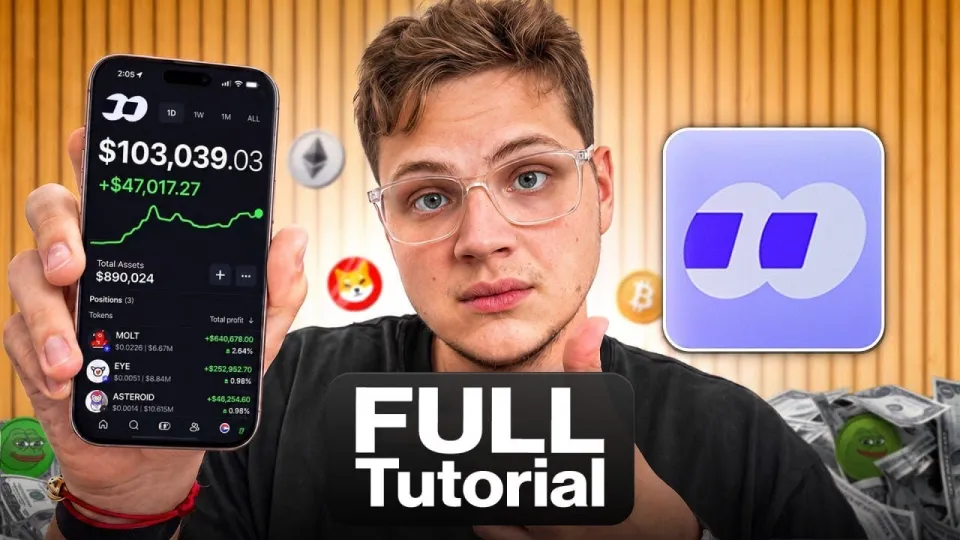
Video: How To Make Money Trading Memecoins (fomo app tutorial)
Want articles like this for your own video to promote it on YouTube and Google? Order them through the Telegram bot @sat_sit_bot. The bot writes and publishes the articles itself (with your YouTube video embedded) on popular topical websites (no ads). Free trial — 50 articles.
· based on the channel Orangie Web3
Meme coin trading is the practice of buying and selling tokens whose price is driven by attention and community momentum rather than cash flow, and the only reliable edge is strict risk control: small positions, fast exits and a shortlist built before the hype peaks. You can start through a Solana-focused interface such as FOMO app registration, which puts token discovery, buying and selling in one place. The rest is discipline, not luck.
Meme coins are the most volatile corner of crypto: a token can triple in an hour and lose 90% of its value by the next morning. That does not make them untradeable, but it does mean the rules matter more than the picks.
What a meme coin actually is and why the price moves
A meme coin is a token with no product, no revenue and usually no team commitment beyond a launch and a marketing push, so its price reflects the flow of new buyers rather than any underlying business. Dogecoin proved the model could survive for years; the thousands of Solana launches that followed show how quickly the same model can fail.
Three forces set the price at any moment:
- Attention. A mention from a large account, a listing on a tracker or a viral meme can add buyers within minutes.
- Liquidity depth. If the pool holds a few thousand dollars, a single meaningful sell moves the price by double digits.
- Holder concentration. When a handful of wallets own most of the supply, the chart is effectively controlled by those wallets.
Because none of these forces is predictable, treat every meme coin trade as a probability bet with a capped loss, not as an investment thesis.
Building a shortlist before you buy anything
A shortlist is a small set of tokens you have already checked against fixed criteria, so you are not evaluating a chart in the middle of a pump. Screen candidates on four numbers.
- Liquidity relative to market cap. A pool that is a tiny fraction of the valuation cannot absorb real selling. Prefer tokens where liquidity is a meaningful share of market cap.
- Holder count and distribution. Thousands of holders with no wallet above a few percent of supply is healthier than a hundred holders and one whale at 30%.
- Age and trading history. A token that has survived several days of trading has already passed the first wave of snipers and rugs.
- Social footprint. Real, varied discussion beats a Telegram group where every message is a price emoji.
Write the list down, with the entry level and the invalidation level for each name. If a token does not meet the criteria, it does not enter the list, no matter how good the chart looks at that moment.
Position sizing and the rules that keep an account alive
Position sizing is the single decision that determines whether a bad streak ends your trading or merely dents it, and the working rule for meme coins is 1–2% of trading capital per position. Most launches go to zero, so a portfolio of ten small bets can absorb seven total losses and still profit from one large winner.
A practical framework:
- Split trading capital into at least 20–30 units. One unit is your maximum loss per idea.
- Never add to a losing meme position to average down; the thesis was attention, and attention is gone.
- Decide the exit before entry: a stop at roughly 30–50% below entry for fast trades, and profit targets at 2x, 5x and 10x.
- Sell in tranches. Taking a third off at 2x returns most of the original stake and lets the remainder run.
- Keep a trade log with entry, exit and the reason for each decision — patterns show up within a few dozen trades.
One viewer of the Orangie Web3 walkthrough described reloading a drained wallet with about $90 and making roughly $30 in a day before giving some of it back. That is the normal shape of meme trading: small capital, fast swings, and the outcome decided by whether losses stay small.
How the FOMO app fits into a meme coin workflow
The FOMO app is a trading interface built around Solana meme coins, and its value is speed: discovery, chart, buy and sell sit in one screen instead of four browser tabs. The walkthrough on the Orangie Web3 channel shows the flow from connecting a wallet to executing a trade.
A sensible routine inside the app looks like this:
- Fund a separate wallet used only for meme trading, keeping long-term holdings elsewhere.
- Browse new and trending tokens, then check each candidate against your shortlist criteria before touching the buy button.
- Enter the position size you calculated in advance, not the amount the interface suggests.
- Set your sell levels immediately after the fill, and treat them as binding.
The most upvoted request under the tutorial was for price alerts, which tells you something useful: even with a fast interface, traders want to stop watching charts all day. Until alerts arrive, set manual price checks at fixed intervals instead of staring at a live candle.
Why copy trading big wallets usually loses money
Copy trading fails for meme coins because the wallet you are copying has already positioned itself before the trade you can see. A large trader can buy through a secondary account, let the visible wallet purchase push the price up, and sell into the followers who arrive seconds later.
Even without any manipulation, the mechanics work against copiers: the visible transaction is confirmation of a move that has already started, slippage on a thin pool eats the first percent of upside, and the copier has no idea at what level the original trader plans to exit. Copy trading can work in liquid markets with longer holding periods; in a token that lives for 48 hours, the delay is the whole trade.
Use large wallets as a signal to research a token, not as an instruction to buy it.
Common questions and mistakes from new meme coin traders
New traders tend to lose money on the same handful of mistakes, and almost all of them are about process rather than token selection. The questions that come up most often in trading communities, including the audience around the Orangie Web3 tutorials, follow a predictable pattern.
- "How much can I make?" The honest answer is that returns are wildly uneven: many positions lose most of their value, a few return 2–5x, and rare ones return 10x or more. Planning for a steady daily percentage is the fastest route to over-sizing.
- "Is it too late to enter?" If you are asking after a vertical candle, yes. The entry you want is before the crowd, which means buying from a shortlist rather than from a trending feed.
- "My wallet got drained — what now?" Revoke token approvals, move remaining funds to a fresh wallet, and never sign transactions from links sent in direct messages.
- "Do I need to watch charts all day?" No. Pre-set exit levels and check at intervals; constant monitoring encourages impulsive trades.
A separate trap is treating a small winning streak as skill. Two lucky trades at 5x can convince a new trader to raise position size right before the losing streak that erases the gains.
Useful links
- FOMO app registration and referral entry: https://fomo.family/r/orangie
- Community Discord for meme coin discussion: https://discord.gg/memecoins
- Orangie on Instagram: https://www.instagram.com/orangieyt/
The takeaway for anyone trading meme coins
Meme coin trading can be profitable, but the profit comes from a shortlist built in calm conditions, positions capped at 1–2% of capital, exits decided before entry, and a refusal to chase candles that have already moved. The FOMO app speeds up execution, yet no interface replaces the rule that most launches fail and your job is to survive them. The walkthrough on the Orangie Web3 channel is a good starting point for the mechanics; the risk framework above is what keeps the account funded long enough to catch a winner. If you want to test the workflow with small size, start with a FOMO app account and keep the first positions deliberately tiny.
Key takeaways
- Meme coins are high-volatility tokens with no cash flow, so every trade is a bet on attention, not on fundamentals.
- A workable risk rule: no single meme position above 1-2% of trading capital, because most launches go to zero.
- Liquidity and holder distribution matter more than the chart: thin pools let one seller wipe out the price.
- Copy trading big wallets usually means buying after their first entry — the price move has already happened.
- FOMO app (fomo.family) bundles discovery, buying and selling of Solana memes in one interface; price alerts are still a requested feature.
- Taking profit in tranches — for example selling a third at 2x, 5x and 10x — keeps a runner alive without giving back the whole gain.
Questions & answers
How much money do I need to start trading meme coins?
You can start with a small amount, but the important number is position size rather than total capital. If you have $100, risk $1–2 per trade so that a long losing streak does not end your trading. The mechanics are identical at any size, so learn them with money you can afford to lose entirely.
Why do people say copy trading meme coins does not work?
Because the wallet you copy has usually entered before the transaction becomes visible, and on thin liquidity that first move is most of the profit. Large traders may also buy through a separate account first to push the price up before selling to followers. Copy trading can work in deep, slow markets; in short-lived meme tokens the delay is decisive.
What should I check before buying a new meme coin?
Check liquidity relative to market cap, holder count and whether a few wallets control most of the supply, how long the token has traded, and whether the social discussion looks organic. If any of these fails your criteria, skip the trade regardless of how strong the chart looks.
Does the FOMO app have price alerts?
Price alerts were the most requested feature under the Orangie Web3 tutorial, so as of that walkthrough they were not part of the core experience. Until they are added, set your own schedule for checking positions and predefine exit levels so you are not relying on constant screen time.
Source: How To Make Money Trading Memecoins (fomo app tutorial) · Markdown version